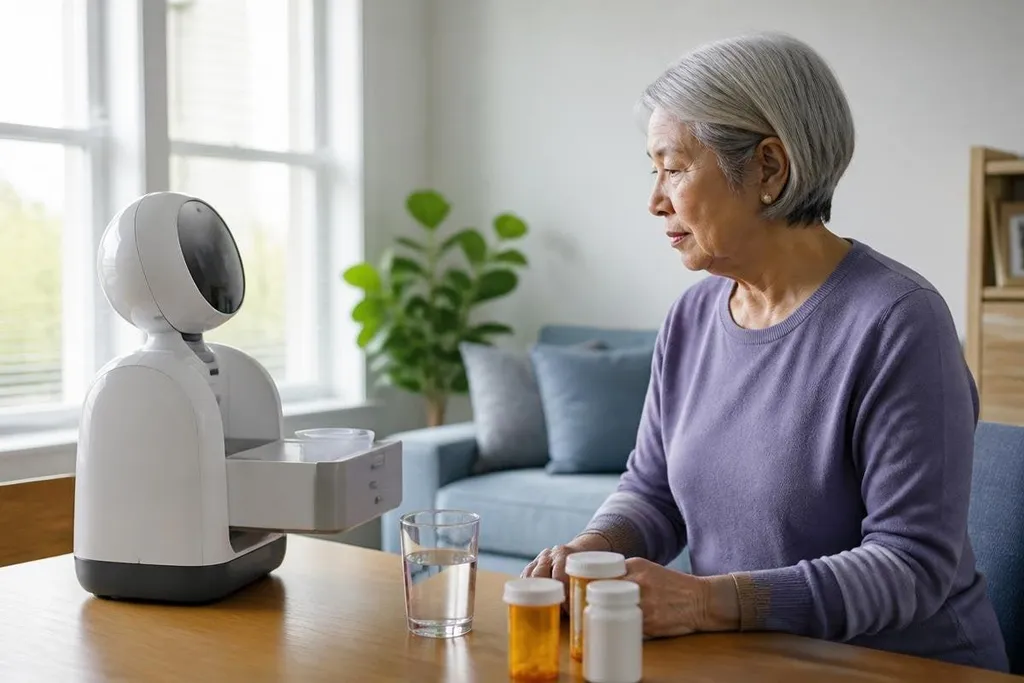
A robot in a home or clinic can remind someone to take medicine, collect health readings, or connect them with a clinician. It can't replace medical care, and its value depends on whether it works with the person's routine rather than adding another device to manage.
- Robots can support reminders, home checks, movement exercises, and remote contact.
- A reading is useful only when the right person can review it and act.
- Privacy, safety, cost, and reliability decide whether a system belongs in a home.
The jobs robots can do
Medication support is one clear use. A system can announce a reminder, show which dose is due, or control access to stored medicine. That may help someone whose condition involves a fixed daily schedule, but the machine still needs a safe way to handle missed doses, changed prescriptions, and medicines that must stay cold.
Home monitoring is another role. A connected robot could help a person take a blood pressure reading, record weight, or check movement during a therapy exercise. The robot's job is to make the task easier to repeat and record. A clinician still needs to decide what the result means.
Some systems can also support communication. A mobile robot with a screen and camera may let a nurse or family member speak with someone without requiring that person to travel. The useful part is the link to a real person, not the robot's ability to move around a room.
Where the machine helps, and where it stops
Chronic care often involves small tasks repeated over many days. A robot can handle a prompt at the same time each morning, guide a known exercise, or carry a sensor from one room to another. Repetition is where automation may earn its place.
The hard part starts when the situation changes. A person may feel unwell, take a new medicine, give an incorrect reading, or need help that the robot was never built to offer. A system that treats every result as a routine event can miss the reason behind it.
That is why the handoff matters. The robot should show what it recorded, when it recorded it, and whether the task was completed. A clinician, caregiver, or family member needs a clear route to review the information and contact the person.
A robot that flags a missed dose can’t tell whether the person forgot or felt too ill to take it. Robot24.com’s health robotics reports can put the machine’s recorded event beside the human review it still needs.
The limits people should check
A home robot may need a stable internet connection, charging space, regular software updates, and someone who can fix a fault.
Voice systems may struggle with speech changes, background noise, or more than one language. A mobile robot may also fail around narrow doorways, loose rugs, stairs, or pets.
Privacy needs the same care as hardware. Cameras, microphones, health readings, and medication records can reveal sensitive details. Before buying or accepting a system, you should know where the data goes, who can view it, how long it stays there, and how access is removed.
Cost is another practical limit. The purchase price may cover the robot but leave out a service plan, replacement parts, cellular data, installation, or staff time. A low-cost reminder device may fit the task better than a mobile robot if movement around the home adds little.
A decision guide for families and care teams
Use this checklist before choosing a system:
- Name the task: write down the repeated job, such as a morning reminder or an exercise prompt.
- Set the handoff: decide who reviews missed tasks or unusual readings, and how they respond.
- Check the home: test doors, floors, stairs, charging space, lighting, and internet access.
- Ask about data: confirm storage, access, deletion, software updates, and camera or microphone controls.
- Price the full setup: include installation, service, repairs, replacement parts, and staff time.
- Plan for failure: keep a non-robot method for medicine, contact, and health checks.
I’d choose the smallest system that handles the named task and keeps a person in the loop. Robots can reduce repeated work around chronic care, but safe management still depends on medical judgment, a reliable handoff, and a plan for the days when the machine fails.